Did the apostle Paul invent Christianity?
The idea is being promoted that the Apostle Paul invented Christianity and that virtually nothing can be known about the historical Christ around which Paul developed a Christology. Scholars like Bart Ehrman point to the book of James with its argument about faith and works being in contradiction with Pauline teachings about justification by faith. The James of the Epistle of James is thought by these scholars to be James the brother of Jesus and he is thought to be a Judaizer and stickler for the Law of Moses. They are wrong on both counts. Paul (Saul) met James the brother of Jesus in Jerusalem to sort out the problem of table fellowship etc between Jews and Gentiles (Acts 15). James the brother of Jesus was not a Judaizer and he was also not the writer of the Epistle of James. It was James the brother of John and the sons of Zebedee who wrote the epistle. James was beheaded by Herod Antipas in AD 44 (see Acts 12) and his brother John received the Apocalypse at Patmos. There is scarcely ten years between the crucifixion of Jesus and the death of James Zebedee. Most scholars regard this as too early for an Epistle like James to be written even though they admit it has all the hallmarks of an early writing. It does not mention Gentiles or the fall of Jerusalem and the problems in the epistle are those faced by the early church described in Acts 1-9. Our argument is that the epistle is about that persecution and the death of Stephen who the Jews envied. The “rich man” and judge in the epistle was the apostle Paul and the “murderers and adulterers” were the Herod dynasty who had intermarried into the priestly clan. They were Edomites and they beheaded John the Baptist, the beloved mentor of John and James because John the Baptist pointed out their murder and adultery. Therefore, the epistle of James is very early, probably written before the Gospel accounts. It has many connections with the Gospel of Matthew, particularly the beatitudes (but not verbatim quotes) which we would expect from John and James who became disciples of Christ and heard him preach and were in every sense “eye witnesses”.
Discussion With Brother Paul – In Defense Of The Apostle Paul Part 1 (1:39 min)
Note that James alludes to Malachi in his Epistle and that is important because so does John the Baptist
| James | Malachi |
| 5.1 Weep and Howl | 2.13 Tears,weeping, crying out..he regardeth not the offering anymore. |
| 4.7 Draw night unto God, and he will draw nigh unto you | 3.7 Return unto me, and I will return unto you |
| 5.4 The Lord of Sabaoth | 3.7 saith the Lord of Hosts |
| 5.3 Eat your flesh as it were fire | 3.2 Like a refiner’s fire |
| 5.3 Your gold and silver is cankered | 3.3 Purge them as gold and silver |
| 5.3 A witness against you | 3.5 A swift witness against |
| 4.4 Adulterers | 3.5 Adulterers |
| 5.4 The hire of the labourers kept back by fraud | 3.5 Those that oppress the hireling in his wages |
| 1.27 The fatherless and the widows in their affliction | 3.5 The widow and the fatherless |
| 1.17 No variableness | 3.6 I am the Lord, I change not |
| 5.18 The coming of the Lord draweth nigh | 3.1 The Lord shall suddenly come to his temple |
The book of Malachi was directed against the corrupt priesthood and against Esau/Edom (=Herod the Edomite and his dynasty). It predicted the appearance of the forerunner (Elijah figure) John the Baptist and of Jesus to cleanse the Temple.
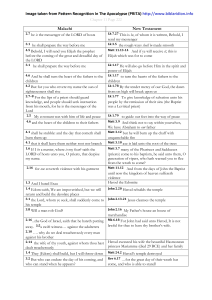
https://www.biblaridion.info/Prita_Malachi.png
The book of Malachi can probably be dated sometime in the reign of Antipater (died 36/37 BC) anticipating the rise to power of the Edomite Kings, with Herod the Great appearing about 33 years before the birth of John the Baptist. The suggested dating range of Malachi is therefore 100- 30 BC. Here is my analysis of Malachi.
** my PDF has errata 100-30CE but Malachi was written before or during the time that Herod the Great took the throne. Herod died ca. 4 BC and Jesus was born ca. 6 BC-4BC (not in the year zero). This would have made Jesus a toddler (less than 2 years old) when Herod slaughtered the innocents in Bethlehem.
https://www.biblaridion.info/Digressions/malachi.pdf
So, it is fitting that the erstwhile disciple of John the Baptist should allude to the same prophecy that predicted the coming of John the Baptist, a book that John the Baptist also quoted.
Psalm 62
James Zebedee also alludes to Psalm 62, a Davidic Psalm ascribed to the rebellion of Absalom with David forced to flee Jerusalem. A fitting Psalm in connection with Christian-jews fleeing to places like Damascus because of rebellion against the true king of Israel -Jesus the greater son of David.
Absalom’s rebellion — David’s flight from Jerusalem: my rock… salvation… defence… expectation… rock… salvation… defence… salvation… glory… rock… strength… refuge… mercy.
| Janes | Psalm 62 |
| 5.6 Ye have condemned and killed the just one (Stephen) | 3. Mischief against a man that ye may slay him |
| 5.7 Be patient therefore, brethren | 5. My soul, wait thou only upon God |
| 5.2,4 Riches…fraud | 10. Oppression…riches |
| 5.9 The judge standeth before the door | 12. Thou renderest to ever man |
| 4.14 Your life a vapour | 9. They are lighter than a breath |
| 4.12 one lawgiver who is able to save | 1. My salvation |
| 4.7 Submit yourself to God | 5. (LXX) Submit yourself unto God |
| 3.10 Out of the same mouth…blessing and cursing | 4. They bless with their mouth, but curse inwardly |
| 2.24 faith vs. works | 8. trust in him at all times |
| 12. According to his work | |
| 2.2 A man in goodly apparel…in vile raiment | 9. Men of low degree…or high degree |
Psalm 62 also has a Messianic application:
Messianic fulfilment
| 1. | My soul waiteth (is silent) was specially true of Jesus in his trial, when he did not answer the charges being brought against him (Matt. 27:12,14). Here is the explanation of those silences before his adversaries: he was praying (cp. Psa. 37:7)! Verse 2 now applies very readily: “He is my defence; I shall not be moved” (cp. 37:24). |
| 3. | A bowing wall… a tottering fence. Apt figures for the fate of Jerusalem and its people: |
| Therefore this iniquity shall be to you as a breach ready to fall, swelling out in a high wall, whose breaking cometh suddenly at an instant” (Isa. 30:13, and see the whole section; cp. Job 24:16; Matt. 6:19; 24:43). | |
| 4. | They only consult. |
| Then assembled together the chief priests, and the scribes, and the elders of the people, unto the palace of the high priest, who was called Caiaphas, and consulted that they might take Jesus by subtilty, and kill him. But they said, Not on the feast day, lest there be an uproar among the people” (Matt. 26:3-5; also see vv. 59,60). | |
| To cast him down from his excellency. Matt. 26:53,68; 27:26. | |
| They bless with their mouth. Matt. 22:16. | |
| 8. | God is a refuge for us. Bewildered and grief-stricken disciples associated with Christ in his suffering. |
| 11. | God hath spoken once… twice. It may be taken as certain that the Father spoke thus to His Son many times, but on two occasions He spoke to him especially for the benefit of others: Matt. 17:5; John 12:28. |
| 12. | For thou renderest to every man according to his work. Consider the appropriateness of this verse with reference to (a) Christ; (b) those in Christ; and (c) those rejecting him.
|
Isaiah 58
Like his erstwhile mentor John the Baptist, whose favourite book was Isaiah, James Zebedee also refers to the Day of Atonement in Isaiah 58. It is an appeal for national repentance lest they be sent away into exile like the scapegoat AND like Absalom who was banished by David after his rebellion. The message is…stop rebelling. Humble yourself and repent.
| James 4 | Isaiah 58 |
| 8. Draw nigh unto God | 2. Approaching to God |
| 10. Humble yourselves | 3. We have afflicted our soul |
| 1. Your pleasures | 3. Ye find pleasure |
| 1. Wars and fighting’s | 4. Strife and debate |
| 9. be afflicted | 5. a day for a man to afflict his soul |
Peter’s use of the epistle
And we find Peter quoting James Zebedee. After all, Peter and James spent time in jail together and then James was beheaded.
| 1 Peter 5.5-9 | James 4.6-10 |
| 1. God resisteth the proud, and giveth grace to the humble | Quote from Prov 3.34 LXX |
| Humble yourself therefore under the mighty hand of God | Humble yourselves in the sight of the Lord |
| That he might exalt you in due time | And he shall exalt you |
| Your adversary the devil…whom resist steadfast in the faith | Resist the devil, and he will flee from you |
As I mentioned in the video, the faith vs works argument is a false one. James is talking about Works of faith not ritualistic works of law keeping. The phrase “show me” your works is a reference to Yahweh-Yireh (Yah will be seen) in Gen 22:14 and this places the sacrifice of Isaac as a work of faith. The faith of Abraham was animated by works. This epistle that so excoriates Saul (Paul) before his conversion is where Paul drew on the lesson that James had taught him. It became fundamental to justification by faith. We are told that Abraham obeyed the full law (Gen 26:5) 430 years before it was even given! Jesus accused those same priests (who claimed Abraham as father) as not doing the works of Abraham. They were faithless and unlike Abraham they did not believe in the appointed messiah. Their works of law would not save them and could only lead to death…not because (as Paul said) that the law of Moses was bad (it was an excellent law), but because of human nature. Those who live under the Law will die by the Law because they are in bondage to but those who live under grace are alive to Christ and will have life everlasting because they are truly free. I will make the bold statement that the seeds of Pauline Christology came from this exposition by James Zebedee. Paul must have pondered the implications of James’ Epistle as he sat in Damascene blindness. He was a Pharisee of the Pharisees and a fantastic rhetorician and a rabbi with an analytical mind. The truth of James’s words must have hit him like a brick.


